
Pool Table Care
Simple habits can protect your cloth, cushions, slate and finish while keeping the table playing consistently for years.

Routine Care Makes a Difference
A pool table does not require constant maintenance, but neglect can shorten the life of the cloth, cushions and finish. Most problems are easier to prevent than repair.
Caring for Pool Table Cloth
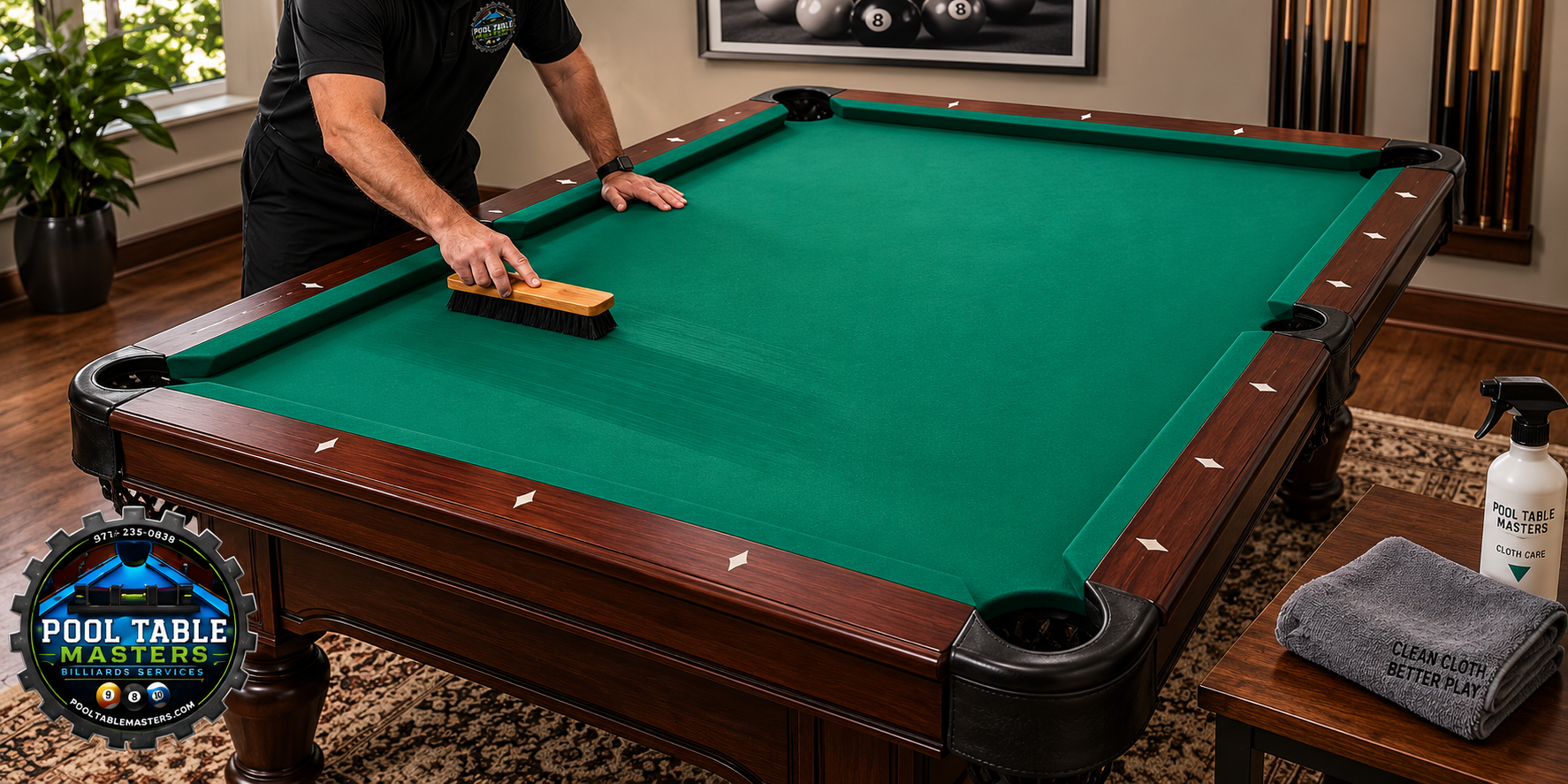
Brush Gently
Use a soft billiard-table brush to remove chalk and debris. Work consistently along the table rather than aggressively scrubbing the cloth. Excessive pressure can wear fibers unnecessarily.
Vacuum Carefully
If vacuuming is needed, use gentle suction and a soft brush attachment. Avoid high-powered suction or dragging a hard nozzle across the playing surface.
Avoid Moisture & Cleaners
Do not soak the cloth or use ordinary household cleaners. Liquids can stain the cloth and may travel below the playing surface into wood components or seams.
Know When Cloth Is Worn
There is no universal replacement schedule. Usage, cloth type, environment and care all matter. Visible wear, tears, damaged fibers or performance changes are better indicators than an arbitrary number of years.

Protect the Table Between Games
Use a Table Cover
A fitted cover helps keep dust, pet hair and sunlight off the playing surface and reduces the temptation to use the table as a storage surface.
Keep Food & Drinks Away
Grease, crumbs and beverages can stain cloth, attract debris and create damage that reaches beyond the felt. A nearby drink table is much cheaper than recovering a pool table.
Pets & Kids
Claws, toys, jumping and spills can damage cloth, rails and finishes. A cover and clear house rules go a long way toward preventing avoidable repairs.
Nothing Heavy on the Table
A pool table is built to support its slate in a specific way. Avoid sitting, standing or placing heavy objects on the rails or playing surface.
Leveling, Flooring & the Room
Changes in how a table plays are not always caused by the table itself. Carpet and padding can compress, floating floors can move, and rubber or interlocking flooring can settle under concentrated leg weight. Temperature and humidity changes can also affect wood components over time.
If a table begins rolling differently after a move, flooring change or environmental change, determine the cause before assuming the original leveling work failed.
Learn about precision pool table leveling → Game Room Planning →
Check the Rails, Pockets & Hardware
Cushion Response
Pay attention to a rail that suddenly rebounds differently from the others. Compare response around all six rails before deciding a cushion is bad.
Pockets
Inspect leather, liners, irons or plastic components for looseness and wear. Address a loose component before repeated ball impacts make the problem worse.
Loose Hardware
Unusual rattles or movement deserve attention. Do not randomly tighten accessible bolts without understanding what they secure; overtightening can cause its own damage.
Slate & Seams
Do not attempt to correct slate seams or leveling by lifting or shimming the table casually. Slate tables are heavy systems that should be adjusted deliberately.
After Moving a Pool Table
A slate pool table should be professionally disassembled for most moves and then reassembled, seams sealed where applicable, cloth installed correctly and the table precision leveled at its new location. Dragging or lifting an assembled table can damage the frame, disturb slate alignment and create leveling problems.
When to Call for Service
Consider professional evaluation when you notice persistent uneven roll, dead or inconsistent rails, loose cloth, slate or seam problems, damaged pockets, frame movement or a problem that would require disassembly to diagnose properly.
Troubleshoot common pool table problems → Repair, Restore or Replace →
Keep Your Table Playing Its Best
Pool Table Masters provides professional refelting, repairs, rail and cushion work, moving, installation and precision leveling throughout Oregon and Southwest Washington.