
Pool Table Game Room Planning
A great billiard room starts before the table arrives. Plan the playing clearance, flooring, lighting and final table location first so the room plays as well as it looks.
Start With the Table and the Cue
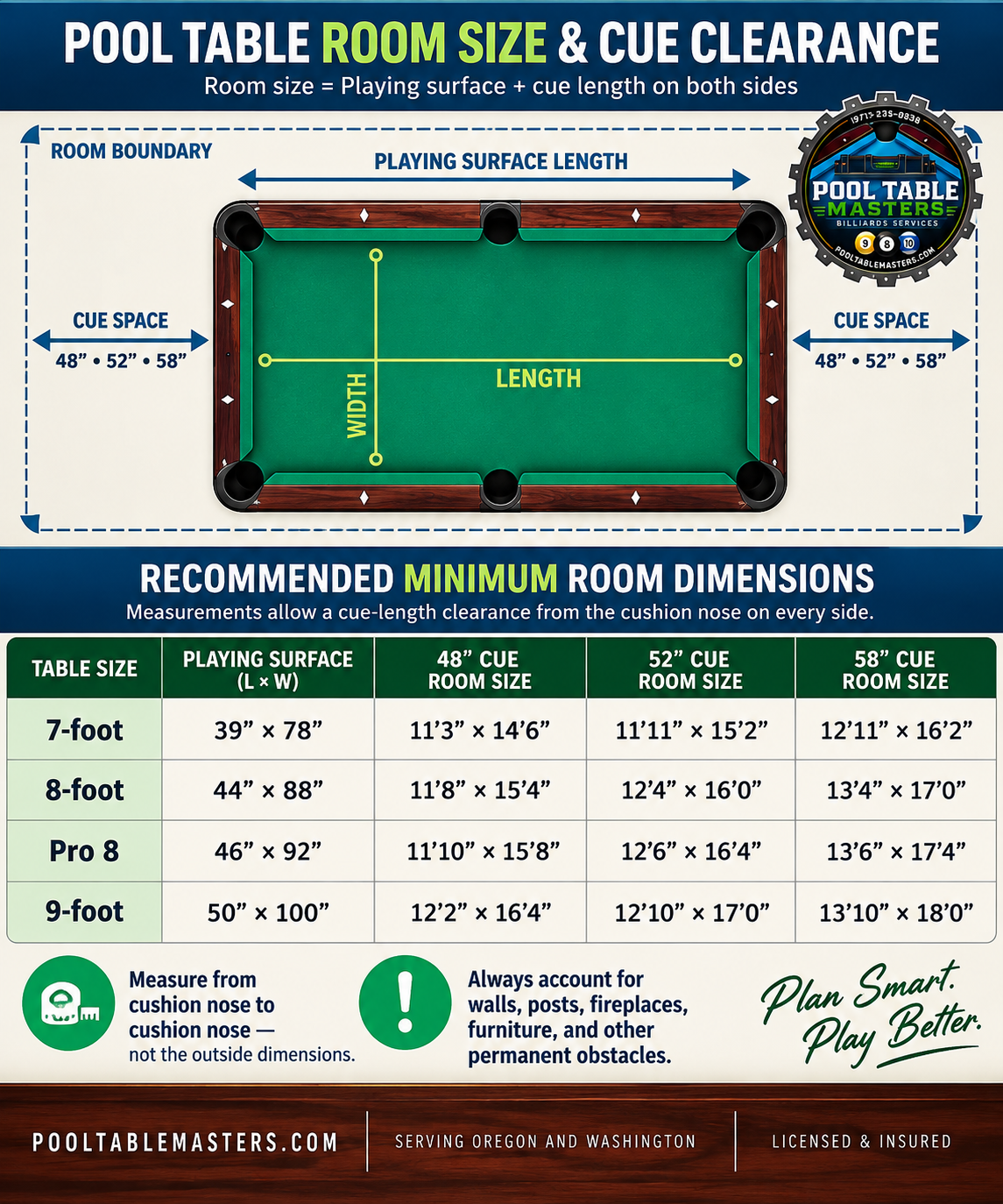
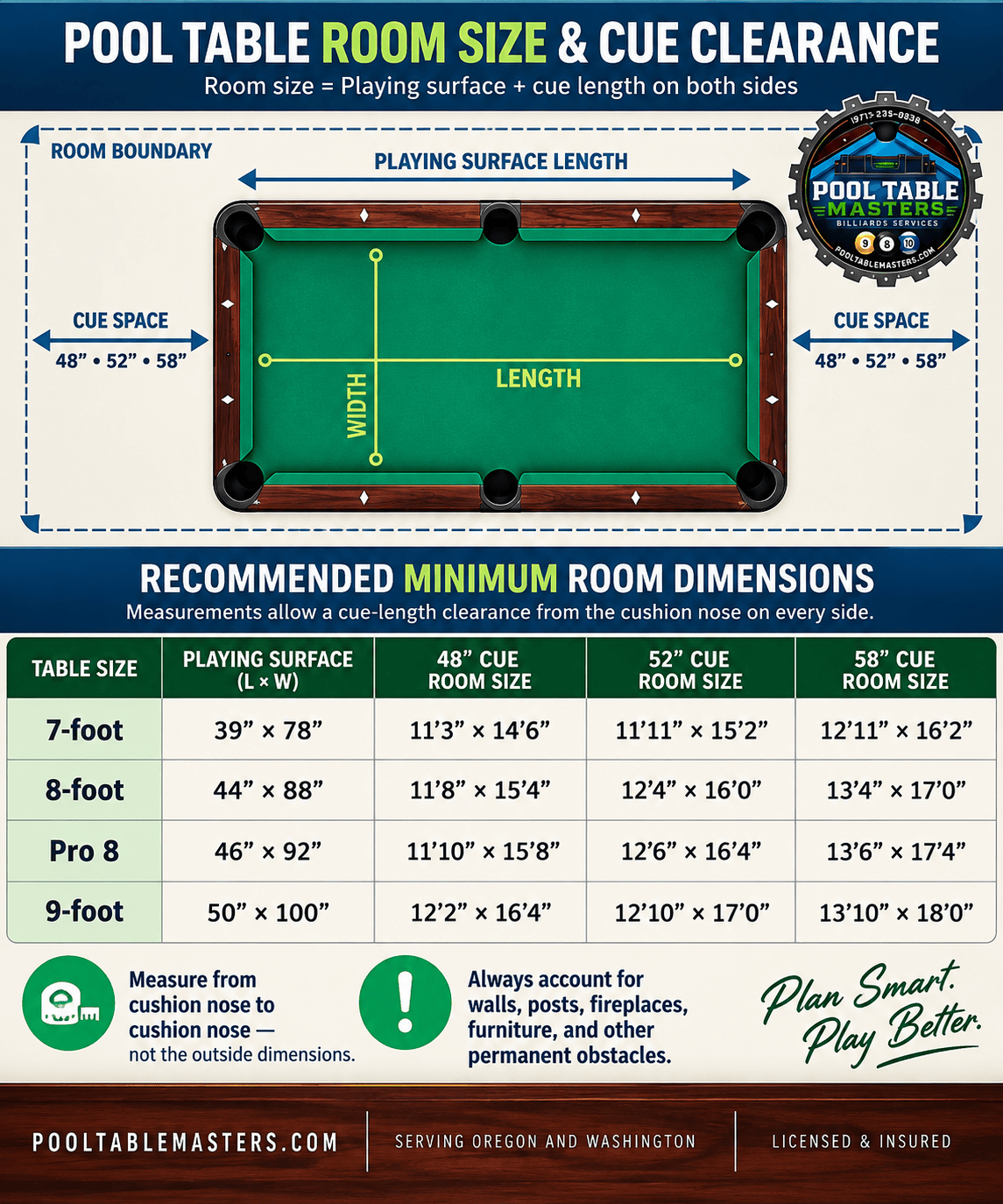
Room dimensions should be based on the playing surface plus cue clearance—not just the outside dimensions of the furniture. A standard cue is about 58 inches long, so walls, columns, counters and furniture can all affect comfortable play.
Use the Pool Table Size & Room Guide →
The Four Big Planning Decisions
Table Size & Clearance
Choose the table size that allows comfortable shots around all four sides. If space is borderline, shorter cues can help in isolated areas, but they are not a substitute for a properly sized room.
Final Table Position
Decide where the table will live before installation. Moving a slate table across the room afterward is not like sliding ordinary furniture and can disturb slate alignment and level.
Flooring
The floor must support substantial concentrated weight at the table legs. The flooring material and what is underneath it can affect how well the table maintains level.
Lighting
Use even, centered lighting that illuminates the full playing surface without harsh glare or distracting shadows. Fixture height depends on the fixture, ceiling and room layout.

Flooring Can Affect Pool Table Level
A slate pool table places hundreds of pounds on a small number of contact points. Even when the table is precision leveled during installation, the flooring underneath can continue to change afterward.
Carpet & Padding
Carpet and padding can compress under the legs after installation. Thicker or softer padding can take time to settle.
Rubber & Interlocking Flooring
Rubber tiles, foam products and gym-style interlocking flooring deserve extra consideration. Even heavy-duty material can compress under the concentrated weight of the table legs.
Hard Surfaces
Concrete, hardwood, laminate and tile generally provide a stable base when the underlying floor is sound, although the finished surface still needs protection from concentrated loads.
Small Changes Matter
A change of only a fraction of an inch at a leg can affect ball roll across the length of the table. If flooring settles, a follow-up leveling adjustment may be appropriate after it stabilizes.
Finish the Flooring Before the Table Arrives
Whenever practical, complete carpet, hardwood, tile, rubber flooring or other floor work before the pool table is installed. Replacing flooring later usually means the table must be professionally disassembled or moved out of the work area and then properly reset.
If you are unsure about a floor, send a photo before the appointment so the installation can be planned appropriately.
Lighting, Storage & Comfort
Billiard Lighting
Center the fixture over the playing surface and aim for even illumination across the entire bed. Avoid fixtures that create bright hot spots, dark corners or glare directly in a player’s line of sight.
If electrical work is needed, have the light positioned before the pool table is installed whenever possible. Pool Table Masters does not sell or install lighting, but we can help confirm the proper table location so your electrician can center the fixture correctly.
Cue Storage
Wall-mounted or floor-standing racks keep cues straight, organized and protected. Leave enough space around racks so players are not crossing the shooting area to retrieve equipment.
Seating & Furniture
Place chairs, pub tables and other furniture outside normal cue movement. Think about where spectators will sit without becoming an obstacle during play.
Accessories
Plan convenient storage for balls, racks, chalk, brushes and a table cover. Keeping accessories organized also helps keep unnecessary objects off the pool table.
Temperature & Humidity
A reasonably stable indoor environment is best for a pool table. Wood components respond to environmental changes, and high humidity can affect cloth performance and wood equipment such as cues. Avoid placing the table where it will be exposed to water, persistent dampness or extreme temperature swings.
Can a Pool Table Go in a Garage?
A garage can work when it stays dry, has a stable floor and is reasonably protected from major temperature and humidity swings. Unconditioned garages with moisture, water intrusion or large seasonal changes can affect the cloth, cushions, wood components and level of the table.
Planning for Delivery & Installation
Think about how the table will reach the room as well as where it will sit. Stairs, narrow hallways, sharp turns and limited door openings matter—especially for one-piece slate tables.
For a used table, identify the manufacturer, size, slate configuration and pickup/delivery access before arranging the move.
Planning a Pool Table Room?
Send Pool Table Masters your room dimensions, table information and a few photos. We can help you spot potential clearance, flooring and installation issues before the table arrives.